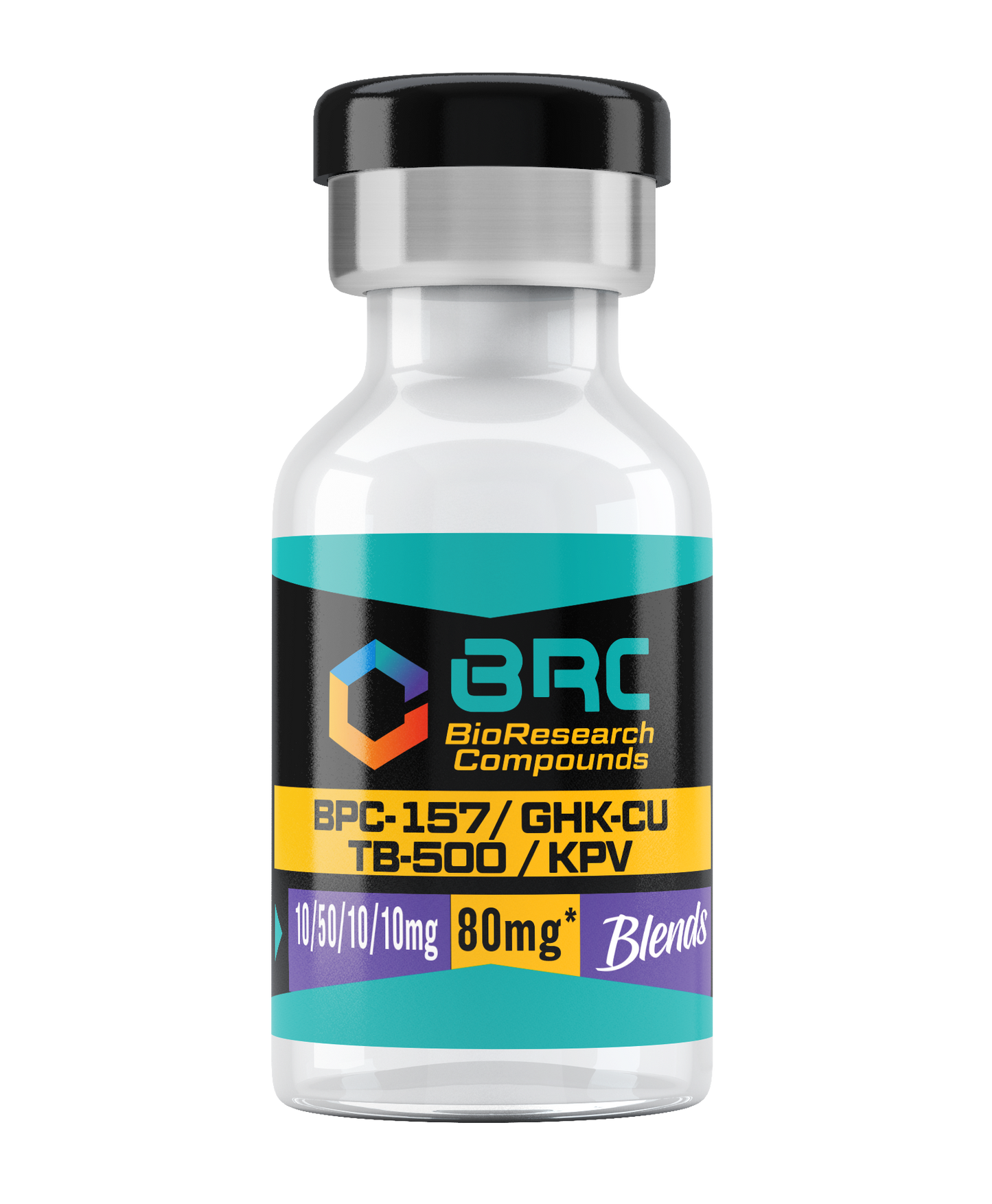
KLOW Blend (80mg)
KLOW Blend (80mg)
BPC-157 (10mg)/GHK-CU (50mg)/TB-500 (10mg)/KPV (10mg)
Couldn't load pickup availability
Overview
KLOW 80mg is a multi-pathway research peptide formulation combining BPC-157, GHK-Cu (Copper Tripeptide), TB-500 (Thymosin Beta-4), and KPV. Together, these compounds have been investigated for their synergistic influence on cellular repair, angiogenesis, inflammation modulation, and tissue regeneration. Each peptide functions through distinct yet complementary biological mechanisms—BPC-157 enhances vascular and fibroblast repair; GHK-Cu promotes collagen synthesis and antioxidant balance; TB-500 supports actin regulation and cell migration; and KPV provides targeted anti-inflammatory and antimicrobial action.
Preclinical evidence suggests this blend may offer a broad platform for studying accelerated recovery and cellular resilience in models related to musculoskeletal, dermal, cardiovascular, and neurological repair. Collectively, the peptides act on nitric oxide signaling, collagen remodeling, and cytokine suppression, providing a versatile foundation for laboratory research into regeneration, oxidative balance, and longevity mechanisms.
COA
COA
BPC-157 Test Results


Third-Party Testing
Third-Party Testing
What is KLOW?
-
Mechanism of Action:
BPC-157 (Body Protective Compound-157)
- Modulates VEGF, eNOS, and Src-Caveolin pathways to promote angiogenesis and cellular repair.
- Enhances growth hormone receptor expression on fibroblasts for targeted tissue healing.
- Regulates inflammatory and genetic activity through pathways involving Egr, Nos, Vegfr, and Kras.
- Influences NO signaling to improve vascular function and tissue regeneration.
GHK-Cu (Copper Tripeptide Complex)
- Stimulates collagen, elastin, and glycosaminoglycan synthesis, improving extracellular matrix integrity.
- Regulates metalloproteinases and anti-proteases to balance tissue remodeling and protection.
- Enhances production of antioxidant enzymes such as superoxide dismutase and glutathione.
- Modulates the expression of over 30% of human genes linked to repair, inflammation, and DNA protection.
- TB-500 (Thymosin Beta-4)
Binds to actin, increasing cell motility and accelerating tissue repair. - Activates PI3K/Akt/eNOS, Notch, and angiopoietin-1/Tie2 signaling for wound healing and angiogenesis.
- Downregulates NF-κB and Toll-like receptor pathways, reducing TNF-α and IL-6 cytokine activity.
- Supports muscle regeneration and fibroblast collagen deposition, essential for connective tissue healing.
KPV (Lys-Pro-Val Tripeptide)
- Inhibits NF-κB activation and decreases IL-8 signaling to limit inflammatory cascades.
- Demonstrates selective anti-inflammatory action—targeting only damaged or overactive tissues.
- Enhances antioxidant enzyme activity and regulates T-cell response for balanced immune modulation.
- Shows antimicrobial potential against Staphylococcus aureus and Candida albicans in laboratory settings.
-
Preclinical Studies:
- Tissue Repair and Regeneration: Enhanced healing of muscle, tendon, dermal, and corneal tissues via fibroblast activation and collagen synthesis.
- Inflammation and Immune Modulation: Multi-pathway suppression of cytokines (TNF-α, IL-6, IL-8) and nitric oxide regulation in autoimmune and inflammatory models.
- Cardiovascular and Neuroprotective Research: BPC-157 and TB-500 have shown improved cardiac recovery and neuroprotective effects under oxidative stress.
- Anti-Scarring and Skin Vitality: GHK-Cu and KPV contribute to reduced fibrosis and hypertrophic scarring, promoting smoother tissue remodeling.
- Antimicrobial Defense: GHK-Cu and KPV aid in minimizing infection risk and supporting immune cell response.
- Anti-Aging and Longevity Studies: Observed influence on gene repair, antioxidant regulation, and mitochondrial efficiency, offering insight into mechanisms of aging and recovery.
-
Intended Use:
- The information provided on this site is intended exclusively for educational and research purposes and should not be interpreted as medical guidance.
- Research compounds, including BPC-157, GHK-CU,TB-500, and GHK-CU are designed solely for laboratory investigation by qualified professionals and are not intended for human use or consumption.
- The statements presented here have not been evaluated by the U.S. Food and Drug Administration, and the products discussed are not intended to diagnose, treat, cure, or prevent any disease.