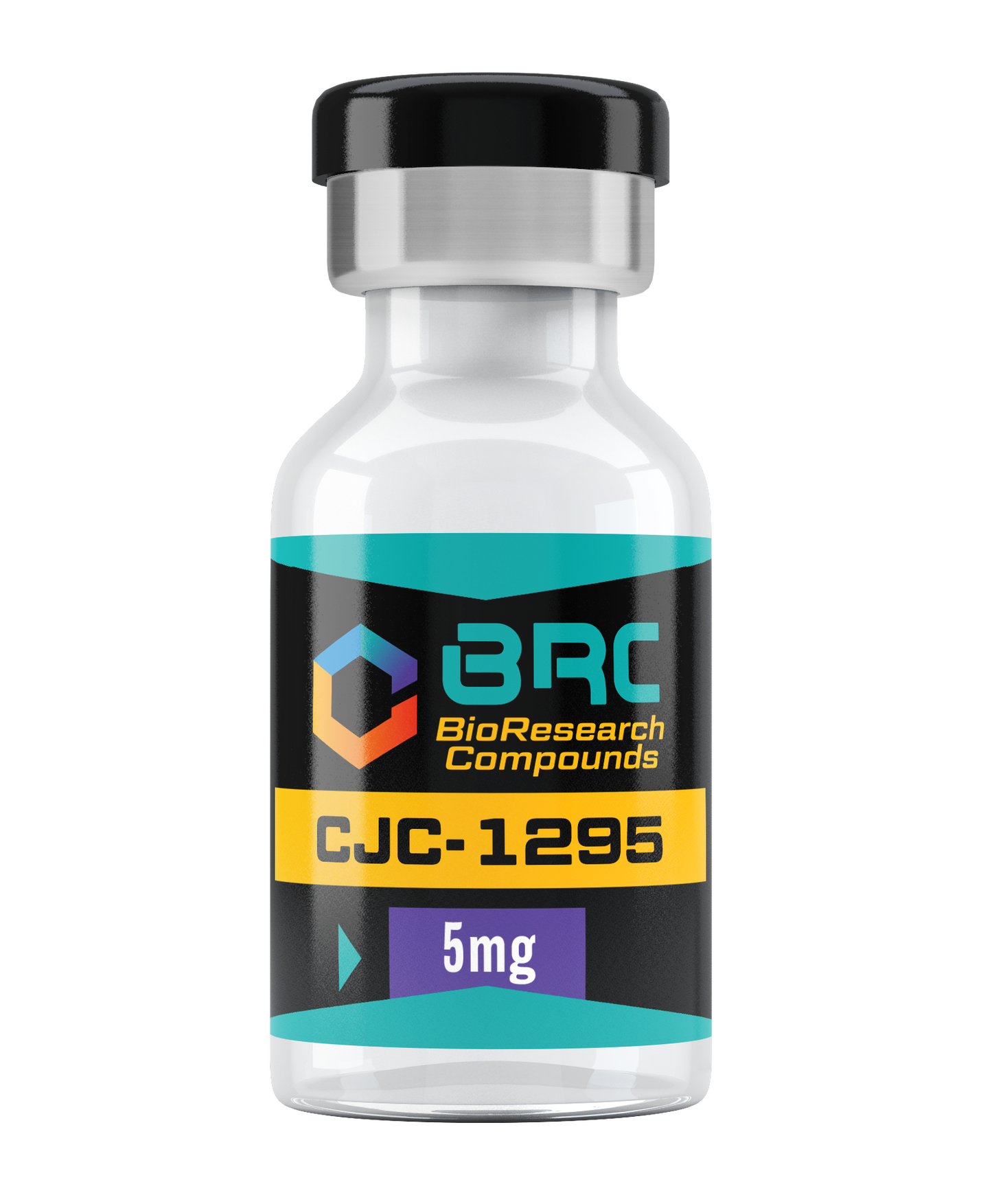
CJC-1295 (5mg)
CJC-1295 (5mg)
Couldn't load pickup availability
Overview
CJC-1295 (Modified GRF 1-29) is a synthetic peptide analogue of growth hormone–releasing hormone (GHRH), originally developed in the 1980s for scientific exploration of growth hormone modulation and regenerative mechanism.
Research has examined its ability to influence muscle repair and growth, improve bone strength, enhance fat metabolism, and support tissue recovery. In experimental settings, it is noted to act synergistically with other peptides such as Ipamorelin and GHRP analogues to optimize pulsatile growth hormone release.
In laboratory studies, CJC-1295 has been investigated for its potential to promote cellular regeneration, metabolic balance, and wound healing. Some scientific explorations have also reported effects related to glucose regulation, immune response, and body composition. These studies remain preclinical, and CJC-1295 continues to be studied as a tool for understanding endocrine pathways and peptide-mediated repair mechanisms.
COA
COA
BPC-157 Test Results


Third-Party Testing
Third-Party Testing


PubChem Information
PubChem Information
What is CJC-1295?
-
Mechanism of Action:
- Acts as a growth hormone–releasing hormone (GHRH) analogue, binding to GHRH receptors in the pituitary gland.
- Stimulates the pulsatile release of endogenous growth hormone (GH), mimicking natural physiological secretion.
- May increase IGF-1 (insulin-like growth factor 1) production indirectly through GH stimulation.
- Supports cellular growth, repair, and protein synthesis mechanisms observed in muscle, bone, and connective tissues.
- When combined with GHRPs (Growth Hormone–Releasing Peptides), it may enhance amplitude and duration of GH release in experimental settings.
- May assist in maintaining lipid and glucose metabolism balance under controlled research conditions.
-
Preclinical Studies:
Research on CJC-1295 has been limited to controlled laboratory and clinical studies exploring:
- Muscle and tissue repair mechanisms and the regulation of anabolic growth pathways.
- Bone density and skeletal health, particularly in age-related research models.
- Metabolic modulation, including fat oxidation and potential effects on glucose tolerance.
- Wound healing and recovery enhancement, involving fibroblast activation and collagen synthesis.
- Immune modulation, where GH and IGF-1 interplay may influence cellular defense responses.
- Exploratory studies into neuroprotective and anti-aging mechanisms, examining hypothalamic–pituitary–somatotropic axis function.
-
Intended Use:
- The information provided on this site is intended exclusively for educational and research purposes and should not be interpreted as medical guidance.
- Research compounds, including CJC-1295, are designed solely for laboratory investigation by qualified
professionals and are not intended for human use or consumption. - The statements presented here have not been evaluated by the U.S. Food and Drug Administration, and the products discussed are not intended to diagnose, treat, cure, or prevent any disease.