

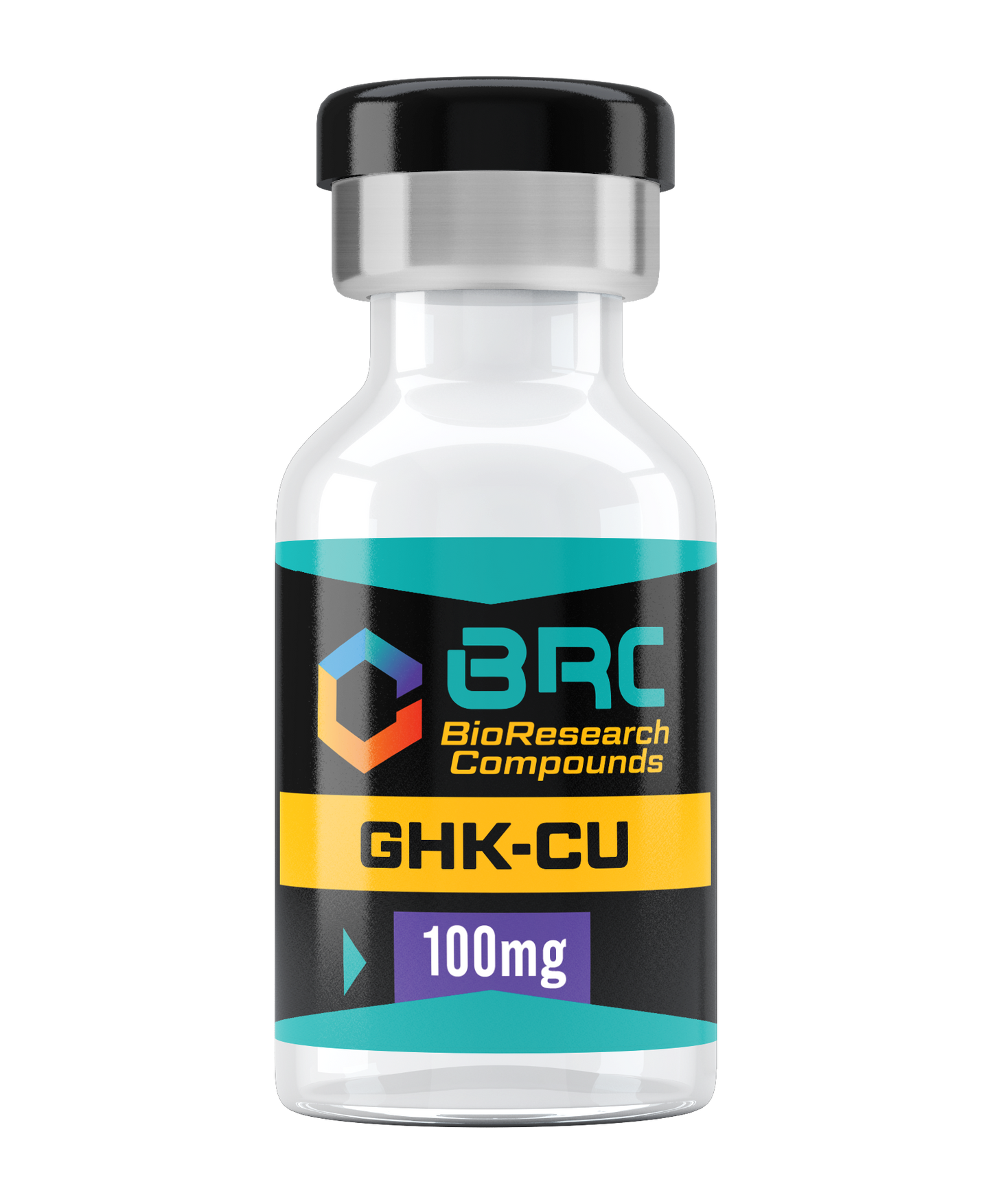
GHK-CU (100mg)
GHK-CU (100mg)
Couldn't load pickup availability
Overvew:
GHK-Cu is a naturally occurring copper-binding tripeptide composed of glycyl-L-histidyl-L-lysine, found in human plasma, saliva, and urine. Discovered in 1973 by Dr. Loren Pickart, GHK-Cu has been widely studied for its tissue remodeling, wound healing, anti-inflammatory, and anti-aging properties. It plays a key role in skin regeneration, hair growth, and epigenetic regulation of gene expression, particularly in aging and damaged tissues.
Its high affinity for copper ions gives it a unique ability to modulate oxidative stress, enhance collagen synthesis, and activate pathways involved in cell proliferation and repair.
Collapsible content
What is GHK-CU?
-
Mechanism of Action:
GHK-Cu exerts biological effects through multiple pathways involving copper transport, gene modulation, and growth factor signaling:
- Copper transport and stabilization: Acts as a carrier of divalent copper ions (Cu²⁺), facilitating their bioavailability for enzymatic processes involved in healing and regeneration.
- Stimulation of extracellular matrix (ECM) synthesis: Enhances collagen, elastin, and glycosaminoglycan production, supporting structural integrity of skin and connective tissue.
- Antioxidant and anti-inflammatory effects: Reduces reactive oxygen species (ROS), inhibits TNF-α, and downregulates NF-κB signaling.
- Gene expression modulation: Influences over 4,000 human genes, upregulating those involved in tissue repair and downregulating those linked to inflammation and cancer.
- Wound healing activation: Promotes angiogenesis, increases keratinocyte and fibroblast migration, and accelerates re-epithelialization.
-
Preclinical and Clinical Studies:
- Wound and skin healing: GHK-Cu has been shown to accelerate wound closure, reduce scarring, and improve tissue elasticity in both animals and human skin explants.
- Hair growth: Topical and injectable GHK-Cu promotes hair follicle stimulation, increases hair shaft size, and reduces follicular miniaturization in models of androgenic alopecia.
- Anti-aging and dermal regeneration: Improves skin density, tightness, and appearance of wrinkles by increasing dermal fibroblast activity and ECM production.
- Anti-inflammatory effects: Inhibits cytokines and metalloproteinases (MMPs), reducing oxidative tissue damage.
- Epigenetic rejuvenation: Demonstrates gene-level reprogramming associated with youthful cellular behavior, offering potential in anti-aging therapeutics.
-
Intended Use:
- The information provided on this site is intended exclusively for educational and research purposes and should not be interpreted as medical guidance.
- Research compounds, including GHK-CU, are designed solely for laboratory investigation by qualified professionals and are not intended for human use or consumption.
- The statements presented here have not been evaluated by the U.S. Food and Drug Administration, and the products discussed are not intended to diagnose, treat, cure, or prevent any disease.
