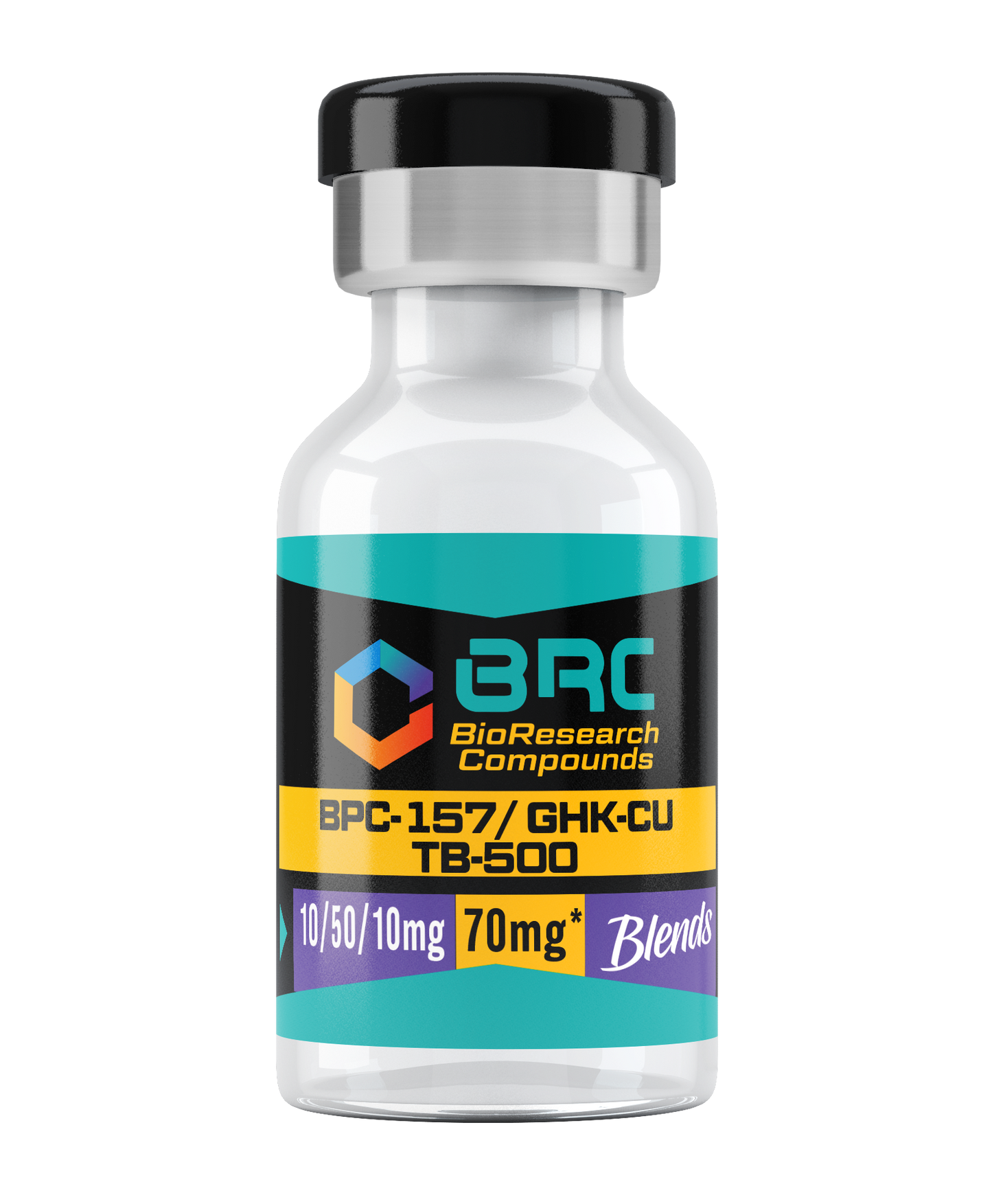
GLOW Blend (70mg)
GLOW Blend (70mg)
BPC-157 (10mg)/GHK-CU (50mg)/TB-500 (10mg)
Couldn't load pickup availability
Overview
GLOW is a specialized research blend that combines three distinct peptides—BPC-157, TB-500 (Thymosin Beta-4), and GHK-Cu (Copper Tripeptide)—to explore their potential synergistic benefits in cellular repair, tissue regeneration, and inflammation modulation. Each component contributes unique biological activities: BPC-157 has been studied for its influence on angiogenesis and nitric oxide signaling; TB-500 supports actin regulation and regenerative processes; and GHK-Cu promotes collagen synthesis, wound repair, and antioxidant balance. When used together in controlled research environments, the trio may enhance multiple cellular pathways simultaneously, offering a multi-dimensional approach to studying recovery and repair processes.
Preclinical and experimental literature suggests that this peptide combination may be beneficial in laboratory studies examining musculoskeletal repair, dermal healing, post-surgical recovery, and age-related cellular decline. The blend has drawn research attention for its roles in modulating inflammatory cytokines, promoting fibroblast activation, and supporting antioxidant enzyme activity, all of which may contribute to improved tissue health and resilience under study conditions.
COA
COA
BPC-157 Test Results


Third-Party Testing
Third-Party Testing
What is GLOW?
-
Mechanism of Action:
- Modulates VEGFR2, FAK-paxillin, and nitric oxide (NO) pathways to support angiogenesis and fibroblast migration
- Alters gene expression of Egr, eNOS, and VEGF, influencing inflammation and vascular repair
- Enhances local growth hormone receptor expression to stimulate fibroblast-driven healing
TB-500 (Thymosin Beta-4):
- Binds to actin to improve cellular motility and tissue regeneration
- Activates PI3K/Akt/eNOS, Notch, and angiopoietin-1/Tie2 pathways to promote wound healing.
- Reduces inflammation by regulating NF-κB, Toll-like receptors, and cytokines such as TNF-α and IL-6
GHK-Cu (Copper Tripeptide):
- Stimulates collagen and elastin synthesis, and regulates metalloproteinases for extracellular matrix remodeling
- Acts as an antioxidant and free-radical scavenger, promoting cellular detoxificatio
Regulates over 30% of human genes involved in tissue repair and inflammation control
-
Preclinical Studies:
- Tissue Repair and Wound Healing: Accelerated healing in preclinical models of muscle, tendon, corneal, and dermal injury through enhanced angiogenesis and fibroblast activity
- Anti-Inflammatory Applications: Modulation of NO signaling and cytokine suppression (TNF-α, IL-6) observed in studies related to rheumatoid, gastrointestinal, and neural inflammation
- Cardiovascular and Neuroprotective Research: Evidence of improved cardiac function, reduced ischemic damage, and potential neuroprotective activity under oxidative stress conditions
- Anti-Aging and Regenerative Effects: Gene modulation and antioxidant enzyme upregulation suggest possible benefits for skin vitality, cell longevity, and tissue rejuvenation in laboratory environments
- Antimicrobial Potential: GHK-Cu and TB-500 show bacteriostatic properties, aiding in reduced infection rates in wound models
-
Intended Use:
- The information provided on this site is intended exclusively for educational and
research purposes and should not be interpreted as medical guidance. - Research compounds, including BPC-157, GHK-CU and TB-500, are designed solely for laboratory investigation by qualified professionals and are not intended for human use or consumption.
- The statements presented here have not been evaluated by the U.S. Food and Drug Administration, and the products discussed are not intended to diagnose, treat, cure, or prevent any disease.
- The information provided on this site is intended exclusively for educational and